

If you have noticed water near your indoor unit, a damp spot on the ceiling, or an air conditioner that shut down without warning, the problem usually starts on the drainage side of the system. For homeowners dealing with their AC leaking water in New Orleans, the key is knowing whether you are seeing normal condensation or a sign that moisture is backing up where it should not.
Is It Condensation or a Real Leak?
A working air conditioner removes moisture from indoor air, and that water should drain through the condensate line to an approved termination point. In New Orleans, LA, normal operation does not include indoor pooling, a wet closet floor, or water marks near an attic air handler.
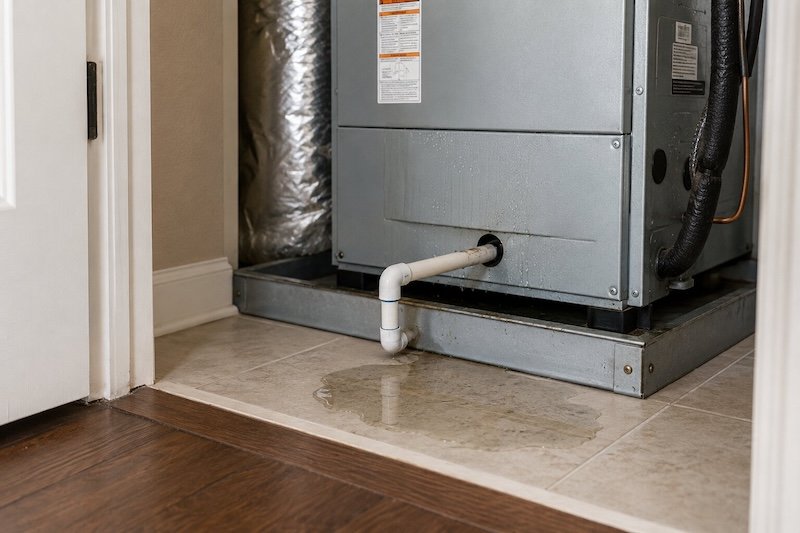
Where the water shows up tells you a lot about the problem. Water under the indoor unit, a full condensate drain pan, wet insulation, a tripped safety switch, or staining around a vent or ceiling usually points to drainage failure rather than harmless condensation.
New Orleans has a high humidity climate, so systems pull more moisture from the air for longer stretches than they do in drier regions. That extra condensate increases the odds that a small drainage issue becomes a visible leak inside the house.
The #1 Cause in New Orleans: A Clogged Condensate Drain Line
In our experience at General Heating & Air Conditioning, the most common reason for AC leaking water in Southeast Louisiana is a clogged condensate drain line. That pattern matters because the fix often starts with drainage, but the root cause may include poor maintenance, algae growth, or hidden slope issues along the line.
Common signs include an overflowing pan, a musty smell near the unit, or a system that stops when the float or safety switch detects rising water. Those shutoffs are protective, not random, and they often prevent a small blockage from causing ceiling damage or mold in wall cavities.
Algae and sludge buildup happen faster in warm, damp conditions, which is why this issue shows up so often in New Orleans homes. A drain line that handles heavy summer moisture for months at a time can quickly accumulate organic film, especially when the system runs hard day and night.
Other Common Reasons Your AC Is Leaking Water
A frozen evaporator coil can create a leak after the ice melts and overwhelms the drain system. That usually traces back to restricted airflow from a dirty air filter, a dirty evaporator coil, blower issues, or low refrigerant, which can drop the coil temperature too far.
A cracked or rusted drain pan can leak even when the drain line is open. Older systems are more vulnerable because metal pans corrode over time, and once a pan fails, water follows gravity into ceilings, insulation, or framing.
A damaged or disconnected condensate drain line can let water escape before it reaches the termination point. A failed condensate pump can do the same thing in systems that rely on pumped drainage rather than gravity.
If you see an active ceiling leak, repeated overflow, or water near electrical components, the issue has moved beyond just a nuisance level. Those symptoms can signal a damaged drain pan, a recurring freeze-up, or another underlying AC problem that needs a full inspection.
What a Leaking Air Conditioner May Be Telling You
Water around the indoor unit usually means the HVAC system is removing moisture but not disposing of it correctly. That distinction matters because the cooling side may still run even as the drainage side is failing.
Ceiling stains often mean the leak has been traveling for a while before becoming visible. By the time drywall changes color, moisture may already be affecting insulation, wood, or the area around the attic unit.
An overflowing drain pan points to blockage, poor drainage, or too much water arriving too fast for the system to handle. Musty odors suggest standing moisture, often the first indoor clue that biological growth is developing around the coil, pan, or insulation, increasing mold risk.
If the system shuts off unexpectedly, a float switch may be doing its job by preventing overflow. Repeated shutoffs should not be ignored because they often indicate a recurring leak pattern rather than a one-time event.
When a Leaking AC Needs Immediate Attention
Water dripping through a ceiling needs prompt attention because drywall can sag, insulation can hold moisture, and hidden wood damage can spread beyond the original leak point. In older homes, that water path is not always straight, so the visible stain may be several feet from the source.
If the system will not turn on, the float switch may have locked it out due to high water in the pan. That safety response protects the home, but it also tells you the drainage issue has reached a level the system considers unsafe.
A burning smell or water near electrical parts raises the urgency. Repeated leaking after someone clears it once also deserves closer evaluation, because a recurring clogged drain line can be a symptom of a larger drainage or airflow problem rather than the whole story.
How a Pro Fixes an AC Water Leak
A proper diagnosis starts by confirming where the water is coming from. Experienced technicians clear and flush the drain line, then verify that water moves freely through the full drainage path.
They also inspect the primary pan and the secondary drain pan, especially in attic installations. A secondary drain pan that holds water is not the cause by itself, but it is strong evidence that the primary drainage path has failed.
A thorough visit includes testing the float switch, checking fittings and slope, and looking for signs of repeat overflow. Good technicians also check for causes of coil freezing, such as airflow restrictions, blower trouble, dirty components, and refrigerant indicators like fast-returning ice or poor cooling.
How to Prevent AC Leaks in New Orleans Homes
In New Orleans, prevention comes down to keeping moisture moving and keeping airflow stable. Regular inspections are more valuable here than in drier climates because the heavy latent load exposes weak drainage systems more quickly.
A practical maintenance cadence includes seasonal service and routine filter changes, along with regular checks of the drain, pan, and safety controls. Homes with persistent humidity issues may also benefit from better indoor air quality strategies and controlling indoor humidity, since excess indoor moisture increases condensate volume.
Float switches add protection by stopping operation before overflow causes larger damage. If a system leaks repeatedly, that pattern can also help clarify whether you are dealing with repair needs, a larger system issue, or even the early signs that you may be considering replacing your air conditioner.
FAQ
Why is my AC leaking water when it’s humid outside?
High outdoor humidity makes your system remove more moisture from indoor air. If the drain line, pan, or pump cannot manage that extra condensate, water can back up and leak.
Can I still run my AC if it’s leaking water?
A leak should be evaluated before normal operation continues. Ongoing runtime can worsen water damage and may pose a risk if moisture reaches electrical controls or nearby materials.
How much does it cost to fix an AC leak in New Orleans?
Cost depends on the cause. A drain line blockage is usually less serious than a failed pump, damaged pan, or refrigerant-related issue, which can indicate an urgent air conditioning problem.
Is a clogged drain line an emergency?
Not always, but it should be addressed quickly. If water is actively leaking, staining a ceiling, or repeatedly tripping the float switch, the problem can escalate fast in a humid home.
A leaking air conditioner is often a drainage problem first, but in New Orleans it can also be an early warning sign of airflow trouble, excess humidity, or a larger mechanical fault. The most useful approach is to treat the water as a symptom, because the visible leak is only one part of what the system is telling you.
If you’ve noticed water around your air conditioner, ceiling stains, or signs of a leak, contact General Heating & Air Conditioning for professional diagnosis and repair.