
Is Your AC Drain Line Clogged or Leaking?
Water around your indoor unit usually means condensation isn’t leaving the system as it should. In many homes, a drain line clog starts as a minor nuisance and can lead to water damage once the condensate drain pan fills and overflows.
Ceiling stains below an attic system, water dripping from a vent area, or an overflowing pan are all signs that the condensate drain is backing up. A musty odor also points to standing moisture, which can feed mold growth inside or around the drain system.
Some systems shut off completely when the float switch senses rising water. That safety shutdown protects your home, but it also indicates the problem has moved beyond routine moisture removal and requires prompt attention.
Common AC Drain Line Problems We Repair
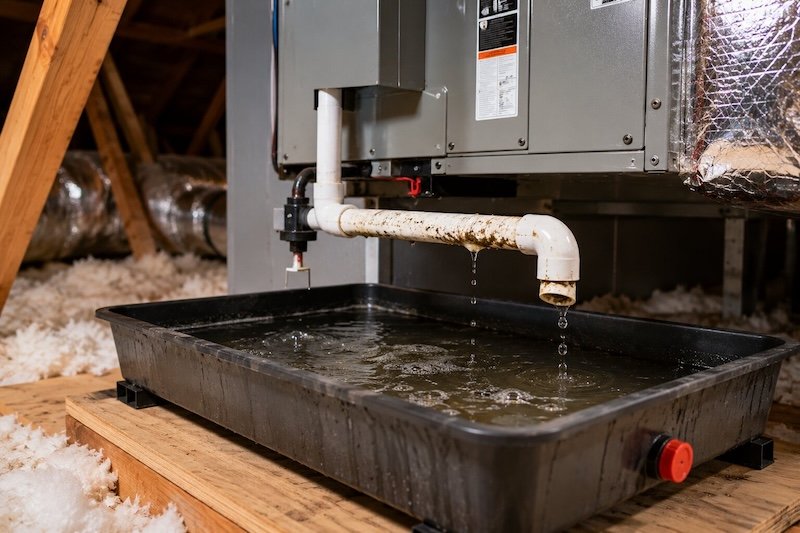
The AC condensate drain line on a central air conditioning system has one job: move moisture out of the home safely. When that path fails, the result can be an active leak, repeated shutdowns, or hidden moisture damage.
Clogged AC Drain Lines
Clogs are the most common issue we see, especially due to algae buildup, sludge, and biofilm in the condensate drain. These materials narrow the pipe over time, slowing drainage until it stops completely.
Cracked or Damaged Drain Lines
Cracked drain piping can leak even when the line is not blocked. A damaged PVC drain pipe often drips slowly into ceilings or wall cavities, making repair more urgent because the water may remain hidden for days.
Failed Condensate Pumps
A failed condensate pump prevents water from being lifted and discharged where gravity drainage is not possible. Pump failures are common in attic or tight-space installations and can cause sudden overflow.
Float Switch Problems
A float switch should stop the system before the condensate drain pan spills over. If the switch fails, the unit may continue running while water rises, increasing the risk of interior damage.
Improper Drain Line Installation
Improper slope, poor routing, or undersized piping can cause chronic drainage trouble. Trained technicians look for installation faults because repeated clogs often indicate a design problem rather than a one-time blockage.
If water is actively leaking, our 24/7 emergency service is available for urgent situations.
Why AC Drain Lines Clog So Often in New Orleans
New Orleans creates the exact conditions that make drain problems common. The hot, humid climate forces air conditioners to pull large amounts of moisture from indoor air, so the drain system works hard for much of the year.
That constant moisture supports algae, sludge, and sometimes mold inside the line. In practical terms, your drain pipe is not staying dry long enough to resist buildup, which is why minor residue can more quickly become a blockage here than in drier climates.
Older homes add another layer of risk because many have attic installations, aging piping, or drain layouts that were not designed for current cooling demand. An older setup can still work well, but it needs closer inspection when leaks start showing up.
Humidity also affects the rest of the system. If your home struggles with indoor moisture, humidity control solutions and indoor air quality services can reduce the conditions that contribute to recurring drain trouble.
Our AC Drain Line Repair Process
A proper repair starts with the entire drainage system, not just the visible leak. We inspect the condensate line, drain pan, float switch, pump (if present), and surrounding equipment to identify the source of the backup or leak.
Next, we locate the blockage or damage and clear the clog or repair the piping as needed. That may involve removing buildup from the line, replacing a damaged section of PVC drain pipe, or correcting a failed component.
We also test the float switch and verify that water drains correctly after the repair. That final test matters because a line that clears temporarily but drains slowly can fail again under heavy cooling demand.
Some homeowners assume they need drain work when the real issue is elsewhere in the system, so we also check for coil icing, airflow problems, and pan/line drainage issues that can mimic a clog. A frozen evaporator coil, low refrigerant, or airflow restriction can cause excess water during thawing, so our process includes checking for underlying HVAC issues that may require repairing your AC system or even emergency AC repair.
AC Drain Line Cleaning vs. Drain Line Repair
Many homeowners search for cleaning when the system already needs repair. Preventive drain line cleaning works well when the line has early buildup, but the piping, pump, and safety controls are still in good shape.
Repair is needed when the line is cracked, the slope is incorrect, the float switch is not working, or the condensate pump has failed, preventing drainage. In those cases, flushing the line may remove debris, but it will not fix the cause of the leak.
Drain line replacement may be the better choice if the piping is deteriorated, is repeatedly clogging due to poor installation, or is tied to a larger drainage design problem. If the system itself is aging or unreliable, we may also discuss AC replacement services so you can compare repair cost against long-term reliability.
The key difference is simple: cleaning removes buildup, while repair corrects a fault. Knowing that distinction helps homeowners avoid repeated service calls for a problem that was never fully fixed.
Preventing Future AC Drain Line Problems
Many repeat drain line calls are preventable with routine maintenance. A scheduled drain line flush removes buildup before it hardens into a blockage, and that small service often costs less than repairing water-damaged ceilings or insulation.
Yearly inspections also catch early signs of trouble, including slow drainage, algae formation, loose fittings, and wear around the condensate drain pan. Finding those issues early matters because drain failures tend to worsen quietly until water shows up where it should not.
Preventative Maintenance Plan
A maintenance plan is the easiest way to stay ahead of recurring clogs. With preventive AC maintenance, your system can be inspected before peak cooling season places the heaviest moisture load on the drain line.
Preventive care also helps uncover related problems, such as dirty coils, weak airflow, or malfunctioning controls. That broader view is what keeps a one-time drain line flush from becoming another leak a few weeks later.
Schedule AC Drain Line Repair in New Orleans
If you have water leaking, clogged drain lines, an overflowing pan, or a condensate pump failure, the safest course is to have the system checked before moisture spreads further throughout the home.
General Heating and Air Conditioning, family-owned since 1978, provides fast, reliable service for drain line issues, including emergency situations that cannot wait until the next business day. Our technicians know how to distinguish a simple clog from deeper causes, such as a frozen evaporator coil, or broader emergency HVAC repair needs.
Call (504) 488-0826 or request service online if your system is leaking, shutting down, or emitting a musty odor. Prompt service can stop the water, protect your home, and get your air conditioner draining properly again.


