

If you live in New Orleans, you already know the problem isn’t just heat. It’s humidity.
A home can technically be 72 degrees and still feel sticky, damp, and uncomfortable. That’s because your air conditioner doesn’t just cool the air. It also removes moisture from your home.
And this is where the difference between a single-stage HVAC system and a variable-speed HVAC system becomes very noticeable.
At General Heating & Air Conditioning, one of the most common things we explain to homeowners is that comfort and temperature are not always the same thing. Two homes can both say 72° on the thermostat, but feel completely different inside depending on the type of system installed.
Why Humidity Matters So Much in New Orleans
In Southeast Louisiana, your HVAC system spends much of the year fighting the air’s moisture.
When humidity stays high inside your home, you may notice:
- Rooms feel sticky or muggy
- Uneven temperatures
- Musty smells
- Poor sleep at night
- Condensation around vents or windows
- Your home feels warmer than the thermostat setting
Many homeowners think they need colder air, but the real issue is humidity control.
That’s where higher-efficiency systems begin to separate themselves from basic single-stage equipment, and it can even support indoor air quality by helping reduce that damp, musty feeling.
How a Single-Stage AC Works
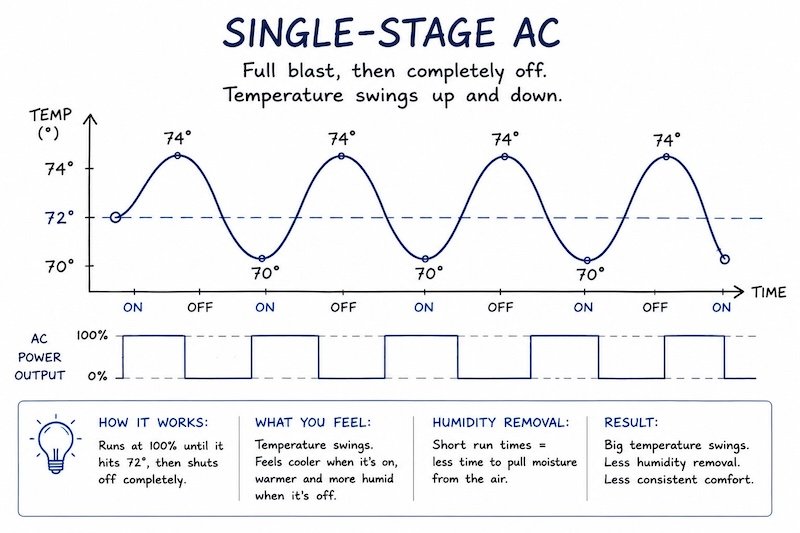
A single-stage air conditioner has one operating speed: full power.
It turns on, runs at 100%, cools the home as quickly as possible, then shuts off completely once it reaches the thermostat setting.
For example:
- You set the thermostat to 72°
- The system blasts at full power until it hits 72°
- The system shuts off
- Humidity and heat start creeping back in
- The temperature rises again
- The system kicks back on and repeats the cycle
That constant up-and-down cycling on and off is why many homes never feel consistently comfortable.
You’ve probably experienced it before. The AC shuts off, and suddenly the house starts to feel warmer or more humid.
That’s typical of a single-stage system.
The Problem With Short Run Times
Air conditioners remove humidity most effectively when they run for longer periods.
Single-stage systems cool quickly, but they often don’t stay on long enough to pull as much moisture from the air.
That’s especially noticeable in New Orleans, where outdoor humidity levels stay high most of the year.
Even when the temperature reaches 72°, the home may still feel damp or uncomfortable.
How a Two-Stage AC Improves Comfort

A two-stage air conditioner is a step up from single-stage equipment.
It can still run at 100% power when needed, but once it reaches the target temperature, it doesn’t shut off completely right away.
Instead, it drops down to a lower operating level, usually around 50% capacity, to help maintain the temperature longer.
That longer runtime helps:
- Keep temperatures more even
- Remove more humidity
- Reduce hot and cold swings
- Improve overall comfort
For many homeowners, this already feels like a major improvement over a basic single-stage unit.
How Variable-Speed AC Systems Work
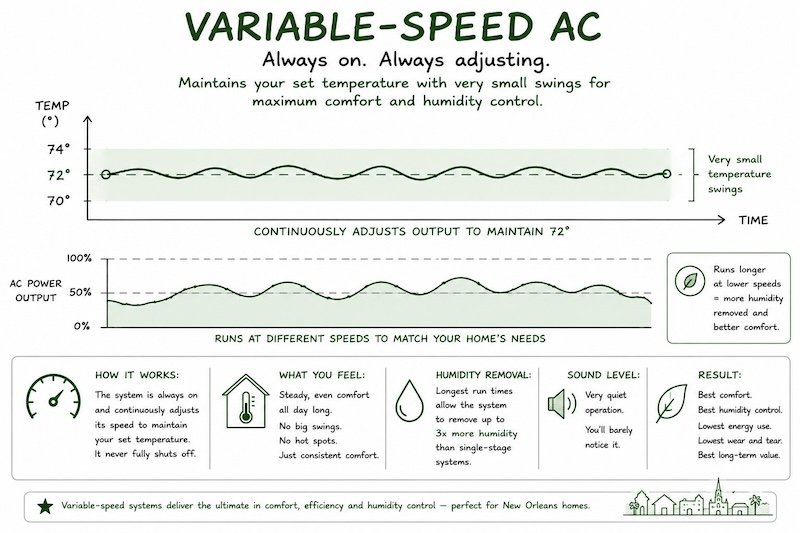
A variable-speed air conditioner takes this even further.
Instead of having just one or two operating speeds, a variable-speed system can continuously adjust its output based on what your home actually needs at any given moment.
Some variable-speed systems can operate across dozens or even hundreds of tiny adjustments in cooling power.
So instead of constantly turning fully on and fully off, the system gradually ramps up or down to maintain a very steady indoor temperature.
If you set the thermostat to 72°, the system works to keep the temperature at 72 ° consistently rather than allowing large temperature swings.
On hotter days, it increases output.
When conditions are milder, it slows down.
Most importantly for New Orleans homes, it runs much longer at lower speeds, which dramatically improves humidity removal.
Why Variable-Speed Systems Remove More Humidity
This is one of the biggest reasons homeowners in New Orleans upgrade to variable-speed systems.
Because the system runs longer and more consistently, it has far more time to extract moisture from the air.
In many homes, a variable-speed system can remove several times as much humidity as a standard single-stage system.
That often leads to:
- More comfortable indoor air
- Less sticky feeling inside the home
- Better sleep
- More even temperatures throughout the house
- Fewer hot and cold spots
Many homeowners notice the comfort difference almost immediately.
Visual Breakdown: Single-Stage vs Two-Stage vs Variable-Speed
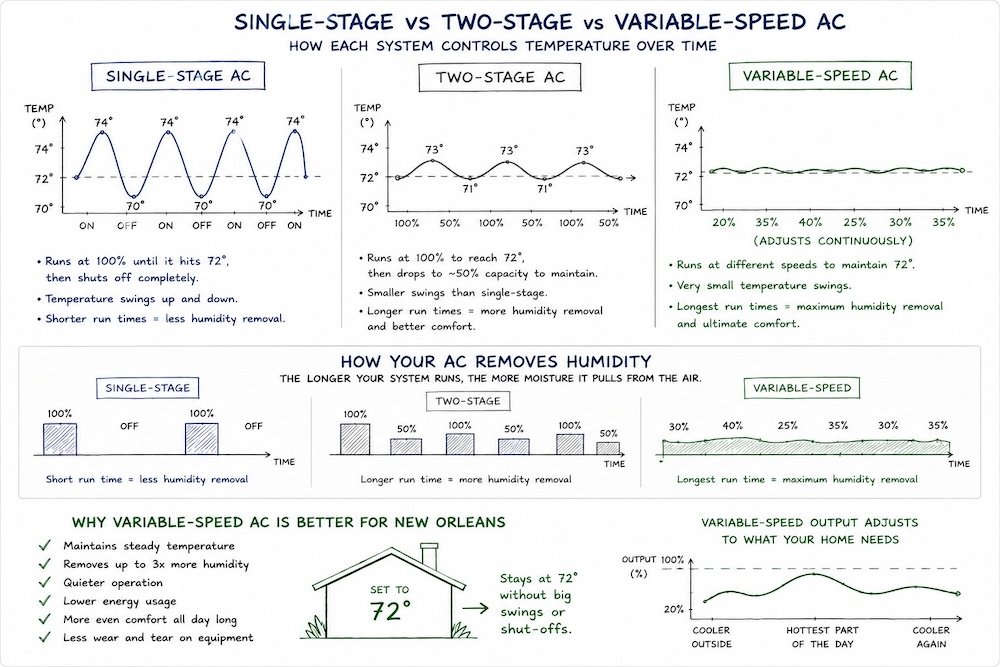
| System Type | Temperature Swings | Humidity Removal | Comfort Level |
|---|---|---|---|
| Single-Stage | Largest swings | Lowest | Basic |
| Two-Stage | Moderate swings | Better | More consistent |
| Variable-Speed | Very small swings | Best | Most comfortable |
Are Variable-Speed Systems More Energy Efficient?
In most cases, yes.
Because variable-speed systems spend much of their time operating at lower power levels rather than constantly starting and stopping at full power, they typically use less electricity overall.
This improved energy efficiency can reduce overall energy consumption and deliver noticeable energy savings, even in homes with high cooling loads.
They also tend to have higher SEER rating options, which is one way manufacturers measure operational efficiency.
Instead of the compressor slamming on and off, it can ramp up and down gradually, and the blower motor can run steadily to support better temperature control.
They’re also quieter during operation since they rarely need to run at maximum output for long periods.
Is a Variable-Speed AC Worth It in New Orleans?
For many homes in Southeast Louisiana, it can absolutely be worth considering.
Humidity control is a major part of indoor comfort here, and variable-speed systems are specifically designed to maintain steadier temperatures and remove more moisture from the air.
That said, every home is different.
A properly sized and installed system matters just as much as the equipment itself. Oversized systems, poor airflow, and duct issues can still create humidity problems even with higher-end equipment.
Good ductwork (including sealed, insulated ducts) and proper HVAC sizing help the air handler move air effectively so moisture can be removed rather than lingering.
That’s why we always recommend looking at the entire system instead of just the brand or efficiency rating.
Need Help Choosing the Right AC System?
At General Heating & Air Conditioning, we help homeowners across Southeast Louisiana choose systems based on comfort, humidity control, efficiency, and how the home actually performs day to day.
That includes matching the right system type, whether it is a straight AC or a heat pump, and making sure the thermostat setup (including a smart thermostat when appropriate) supports how the equipment is designed to run.
Contact us online or call us at (504) 488-0826 to schedule service today.